
The Problem of Meaning: Suffering, Mental Health, and the Human Condition
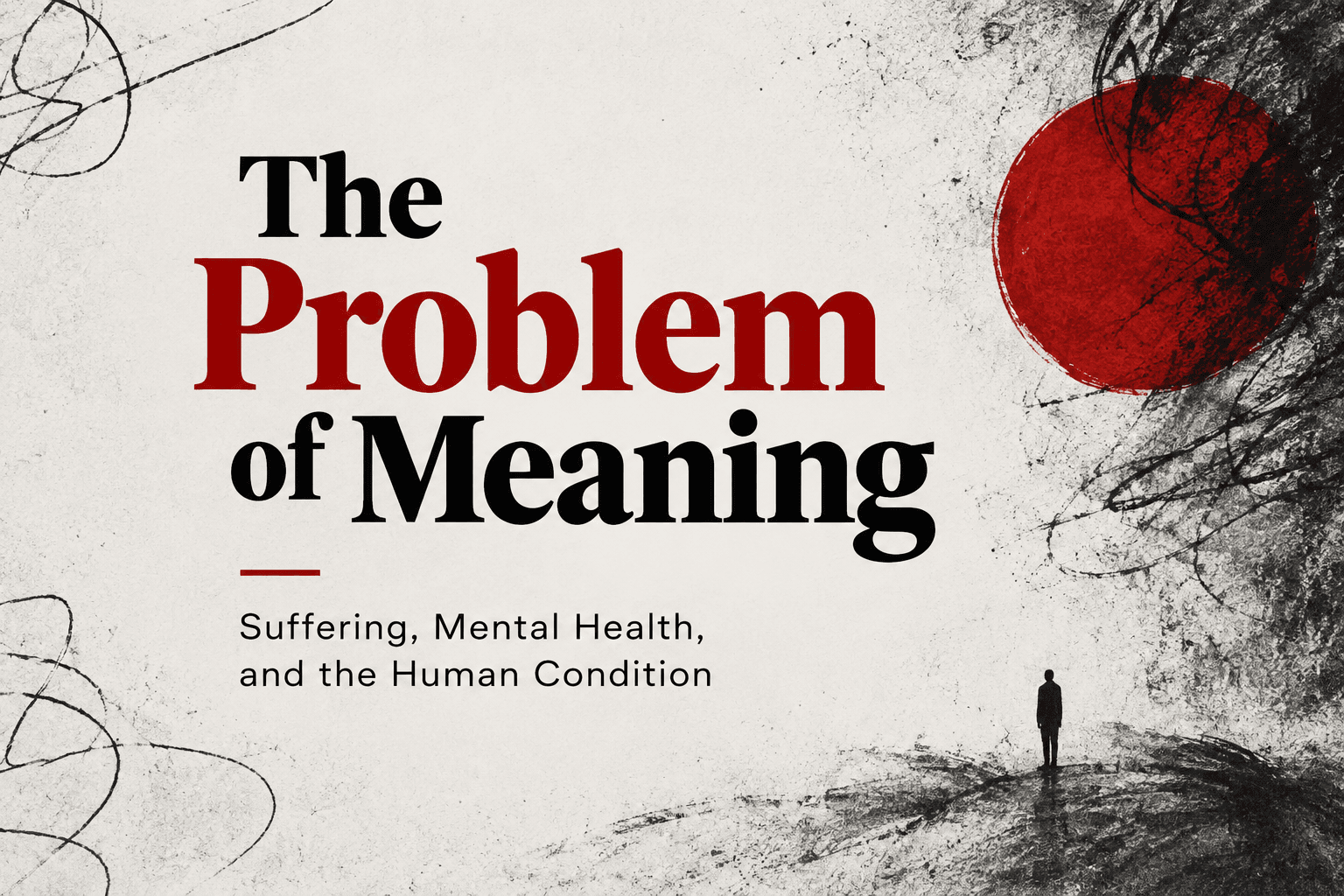
Mental health and healing.
Life is the only form of consciousness we know. Who knows whether death is another form of consciousness? Only the dead can answer, and maybe they will call us dead too.
Over time, suffering has become the problem and our enemy. But that is not true. Suffering helps us feel the reality of life; it is what points us to the problem.
What is the problem? In simple terms, the problem is consciousness without meaning. One of the deepest forms of suffering is existence without purpose.
Imagine anything that serves no purpose, then imagine yourself as that thing. That is the problem.
We often reduce ourselves to situations in our lives when we can't see the meaning, instead of taking the responsibility of making meaning of the chaos.
That's what mental health is about. It is the physiological and emotional state of well-being in which an individual is able to cope with the normal stress of life, realize their potential, learn and work productively, and contribute to their community. It fundamentally influences how we think, feel and act.
We can say mental health is the measure of how well chaos is organized in a person's life.
We think that when humans seek meaning in their lives, it removes tension and creates stability, but the opposite is that case. When we seek for order in our lives, there is a tension that is created between who we want to be and who we are, where we want to be and becoming the person required to get us there. This is necessary for mental health.
Mental capacity differs from person to person, and the greater the capacity, the more equipped the person is to handle chaos.
Experiences or environment can stress the capacity to cope, and cause a crack or leakage somewhere. This is what is called trauma: a psychological or emotional wound caused by experiencing or witnessing events that overwhelm a person's ability to cope, leaving lasting effects on their mind, body, and sense of safety.
This can be resolved by increasing the capacity of the vessel, or changing the environment.
It can be achieved by finding a greater meaning or a different path.
If the problem is not addressed, the wound may deepen. In psychology, one condition associated with trauma is PTSD or Post Traumatic Stress Disorder. This is where we believe that "time heals" without doing the work of healing. Time can increase the distance of our consciousness from the wound, creating an illusion of healing by covering the face of the wound while it rots inside. PTSD can show up in reactions to situations that resemble the events that caused the trauma, sometimes in ways that seem disproportionate to the present situation. If, at this point, attention still does not return to the underlying problem, the process proceeds to Mental Illness or Madness.
The conversation of mental illness and madness needs to be addressed too, in the development of mental health, in our society.

Never miss a post.
Subscribe and the next one lands in your inbox.